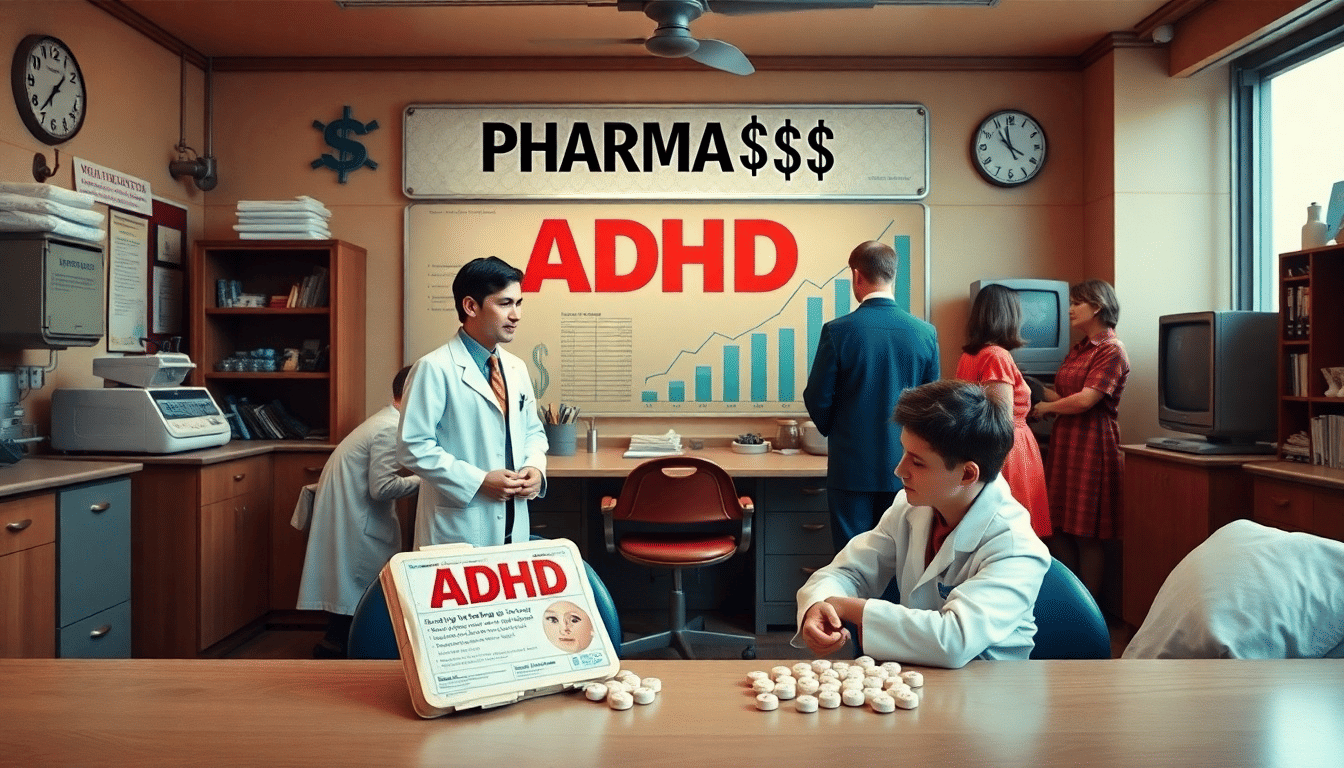
The emergence of Attention Deficit Hyperactivity Disorder (ADHD) as a diagnosis in the 1970s and 1980s marked a pivotal moment in psychiatric history that significantly influenced the pharmaceutical industry’s growth and profitability. This period witnessed the transition from ‘Hyperkinetic Reaction of Childhood’ in DSM-II (1968) to ‘Attention Deficit Disorder’ in DSM-III (1980), establishing a broader and more standardized framework for diagnosis that expanded the potential patient population [tandfonline.com]. The pharmaceutical industry recognized this as a substantial market opportunity, leading to aggressive marketing strategies and the development of medications specifically targeting ADHD symptoms. This report examines the complex relationship between diagnostic development and pharmaceutical companies during this critical period, exploring how changes in diagnostic criteria, marketing approaches, and economic strategies converged to create a lucrative market for ADHD medications.
The Evolution of ADHD Diagnostic Criteria and Pharmaceutical Influence
From Hyperkinetic Reaction to Attention Deficit Disorder
The transition from ‘Hyperkinetic Reaction of Childhood’ in DSM-II (1968) to ‘Attention Deficit Disorder’ (ADD) in DSM-III (1980) represented a fundamental shift in the understanding and classification of attention-related disorders. This change was influenced by various factors, including evolving research on childhood behavior, increased awareness of mental health issues, and the growing influence of pharmaceutical companies in the healthcare sector [mds.marshall.edu]. The reclassification expanded the definition beyond hyperactivity to include inattention, allowing for a more nuanced diagnosis that encompassed a broader range of symptoms and affected individuals [verywellmind.com]. By recognizing ADD as a distinct diagnosis, the DSM-III provided a clearer framework for identification and treatment, opening new avenues for pharmaceutical intervention and market expansion [magazine.theaca.net.au].
Pharmaceutical Industry’s Role in Shaping Diagnostic Criteria
The pharmaceutical industry played a significant role in influencing the development and acceptance of ADHD diagnostic criteria during the 1970s and 1980s. Research published during this period indicated a marked increase in ADHD diagnoses, coinciding with the introduction of stimulant medications like Ritalin [tandfonline.com]. Critics argue that this surge in diagnosis was not solely based on clinical necessity but was also driven by pharmaceutical companies’ aggressive marketing campaigns targeting both healthcare providers and the public [tandfonline.com]. The relationship between pharmaceutical funding and ADHD research raised concerns about potential conflicts of interest, as many researchers relied on funding from these companies, potentially biasing their findings toward the efficacy of medications over other interventions [pbs.org].
The Expansion of Diagnostic Parameters
The DSM-III introduced more specific diagnostic criteria for ADD, which included detailed symptom lists for inattention, impulsivity, and hyperactivity [pmc.ncbi.nlm.nih.gov]. This transition was influenced by political maneuvering rather than purely scientific discovery, with pharmaceutical companies recognizing the potential for expanding their market through a broader diagnostic framework [magazine.theaca.net.au]. The removal of situational context requirements for symptoms further widened the diagnostic net, allowing for diagnosis even when symptoms were not consistently present across different environments [daily.jstor.org]. This expansion of diagnostic parameters directly benefited pharmaceutical companies by increasing the pool of potential patients who could be prescribed ADHD medications [healthline.com].
Pharmaceutical Marketing Strategies During the ADHD Emergence
Targeting Medical Professionals
During the 1970s and 1980s, pharmaceutical companies developed sophisticated marketing strategies aimed at healthcare providers to promote ADHD medications. Medical journal advertisements became a primary channel for reaching physicians, with nearly 50% of advertising space in journals like the Journal of the American Academy of Child and Adolescent Psychiatry devoted to pharmaceutical ads for ADHD treatments [samgoldstein.com]. These advertisements often emphasized the benefits of medication while downplaying potential risks or side effects, creating a perception of necessity for pharmacological intervention [go.gale.com]. Companies also sponsored educational events and conferences where they could directly engage with physicians and influence their prescribing behaviors [drugwatch.com].
Educational Materials and School Interventions
Pharmaceutical companies recognized the influential role of educators in identifying children with potential ADHD symptoms and referring them for medical evaluation. Companies like Shire and Novartis created educational resources for teachers, framing ADHD as a serious condition requiring medical intervention [pmc.ncbi.nlm.nih.gov]. These materials often positioned ADHD medications as essential solutions for improving classroom behavior and academic performance, effectively turning teachers into brokers in the diagnosis and treatment process [pmc.ncbi.nlm.nih.gov]. By penetrating the educational domain, pharmaceutical companies expanded their marketing reach beyond traditional medical channels, creating a broader awareness and acceptance of ADHD as a condition requiring medication [pmc.ncbi.nlm.nih.gov].
Funding Advocacy Groups and Patient Organizations
A crucial marketing strategy employed by pharmaceutical companies during this period was the funding of patient advocacy groups and self-help organizations. Groups like Children and Adults with ADHD (CHADD) received significant financial support from companies like Ciba-Geigy (the original manufacturer of Ritalin), creating potential conflicts of interest [thehastingscenter.org]. According to the New England Journal of Medicine, industry-sponsored advocacy groups were more likely to endorse drugs and policies that aligned with their sponsors’ financial interests [thehastingscenter.org]. These organizations provided valuable resources and support for individuals with ADHD, but their financial ties to pharmaceutical companies raised questions about the objectivity of the information they provided [pbs.org].
Economic Outcomes of the ADHD-Pharmaceutical Relationship
Market Growth and Revenue Expansion
The relationship between ADHD diagnosis and pharmaceutical marketing strategies resulted in significant economic outcomes for the industry. The formalization of ADHD as a diagnosis in the DSM-III contributed to a substantial increase in prescriptions for stimulant medications, leading to billions in sales for pharmaceutical companies [tandfonline.com]. Ritalin became a widely prescribed treatment, with companies like Novartis (formerly Ciba-Geigy) experiencing significant financial growth due to the expanding ADHD market [pbs.org]. The financial impact was profound, as the ADHD diagnosis opened a lucrative market for medications that continues to grow today [tandfonline.com].
Prescription Trends Following Diagnostic Changes
Following the publication of the DSM-III in 1980, there was a notable increase in ADHD prescriptions, reflecting the impact of the new diagnostic criteria on treatment patterns. Stimulant use in children with ADHD increased fourfold between 1987 and 1996, partly facilitated by the decision to include ADHD as a protected disability under the American with Disabilities Act of 1990 [daily.jstor.org]. This surge in prescriptions directly translated to increased revenue for pharmaceutical companies, establishing a pattern of growth that would continue in subsequent decades [bigthink.com]. The increased recognition of ADHD as a legitimate medical condition requiring treatment fueled the expansion of the pharmaceutical market for ADHD medications [verywellmind.com].
Long-term Economic Implications
The emergence of ADHD as a diagnosis in the 1970s and 1980s set the foundation for what would become a multi-billion-dollar market for pharmaceutical companies. The introduction of stimulant medications for ADHD treatment during this period was significantly influenced by the evolving understanding of the disorder itself [mds.marshall.edu]. As ADHD gained recognition as a legitimate medical condition, pharmaceutical companies capitalized on this opportunity by developing and marketing medications specifically targeting its symptoms [mds.marshall.edu]. The economic implications extended beyond direct medication sales to include increased healthcare costs associated with diagnosis and treatment, contributing to the overall financial burden of ADHD on families and the healthcare system [journals.sagepub.com].
The Intersection of Science, Medicine, and Pharmaceutical Profit
Questionable Research Practices and Conflicts of Interest
The relationship between pharmaceutical companies and researchers during the ADHD emergence period raised serious ethical concerns. Many studies that supported the efficacy of ADHD medications were funded by the same companies that manufactured these drugs, creating potential conflicts of interest that may have biased research outcomes [jmcp.org]. The pharmaceutical industry’s influence on research extended to ghostwriting practices, where company-paid writers authored studies that were then published under the names of academic researchers [magazine.theaca.net.au]. This questionable practice undermined the integrity of ADHD research and raised doubts about the validity of studies supporting medication as the primary treatment approach [magazine.theaca.net.au].
Medicalization of Childhood Behavior
The emergence of ADHD as a diagnosis has been criticized as part of a broader trend of medicalizing normal childhood behaviors. Critics argue that the pharmaceutical industry played a significant role in promoting the view that behaviors like inattention and hyperactivity should be treated as medical conditions rather than variations of normal development [daily.jstor.org]. This medicalization served the financial interests of pharmaceutical companies by creating a market for medications to treat these newly defined “disorders” [magazine.theaca.net.au]. The pharmaceutical industry’s marketing strategies often framed ADHD as a neurological disorder, despite a lack of objective evidence supporting this view, further contributing to the medicalization of childhood behavior [magazine.theaca.net.au].
Ethical Considerations in Early ADHD Marketing
The aggressive marketing of ADHD medications during the 1970s and 1980s raised important ethical questions about the pharmaceutical industry’s influence on medical practice. Companies often emphasized the benefits of medication while downplaying potential risks, creating a skewed perception of the risk-benefit ratio [samgoldstein.com]. The targeting of vulnerable populations, such as children and their parents, raised concerns about the ethics of direct-to-consumer advertising for prescription drugs [psychbreakthrough.com]. Additionally, the pharmaceutical industry’s influence on diagnostic criteria and treatment guidelines highlighted the potential for financial motives to shape medical standards, raising questions about the integrity of the diagnostic process itself [jmcp.org].
Conclusion
The emergence of ADHD as a diagnosis in the 1970s and 1980s represented a transformative period for both psychiatry and the pharmaceutical industry. The expansion of diagnostic criteria through the transition from ‘Hyperkinetic Reaction of Childhood’ to ‘Attention Deficit Disorder’ created a larger market for stimulant medications, which pharmaceutical companies eagerly capitalized on through sophisticated marketing strategies targeting healthcare providers, educators, and advocacy groups. This relationship between diagnostic development and pharmaceutical promotion resulted in significant economic gains for the industry, setting the foundation for what would become a multi-billion-dollar market for ADHD medications. While the recognition of ADHD has helped many individuals receive necessary treatment, the financial interests that influenced its diagnostic evolution raise important questions about the medicalization of behavior and the ethical implications of pharmaceutical marketing practices. The historical context of ADHD’s emergence reveals a complex interplay between scientific advancement, medical practice, and commercial interests that continues to shape how we understand and treat attention-related disorders today.
Leave a Reply